
When the Rumen Works, Fibre Becomes Milk

When the Rumen Works, Fibre Becomes Milk

An on-farm trial involving 170 Holstein cows in northern Italy recorded improved fibre digestibility and increased milk production with BioCell® R.

Getting more from a dairy ration depends on how effectively the cow can digest and utilise it. Fibre digestion plays a central role, helping turn forage into the energy needed to support milk production.

BioCell® R is a complementary feed containing the live yeast Saccharomyces cerevisiae DBVPG 48 SF, a strain authorised for use in dairy cow nutrition. An on-farm trial in the province of Mantua, Italy, assessed its effects on ration digestibility, particularly fibre, and milk yield.
Cows

The Trial

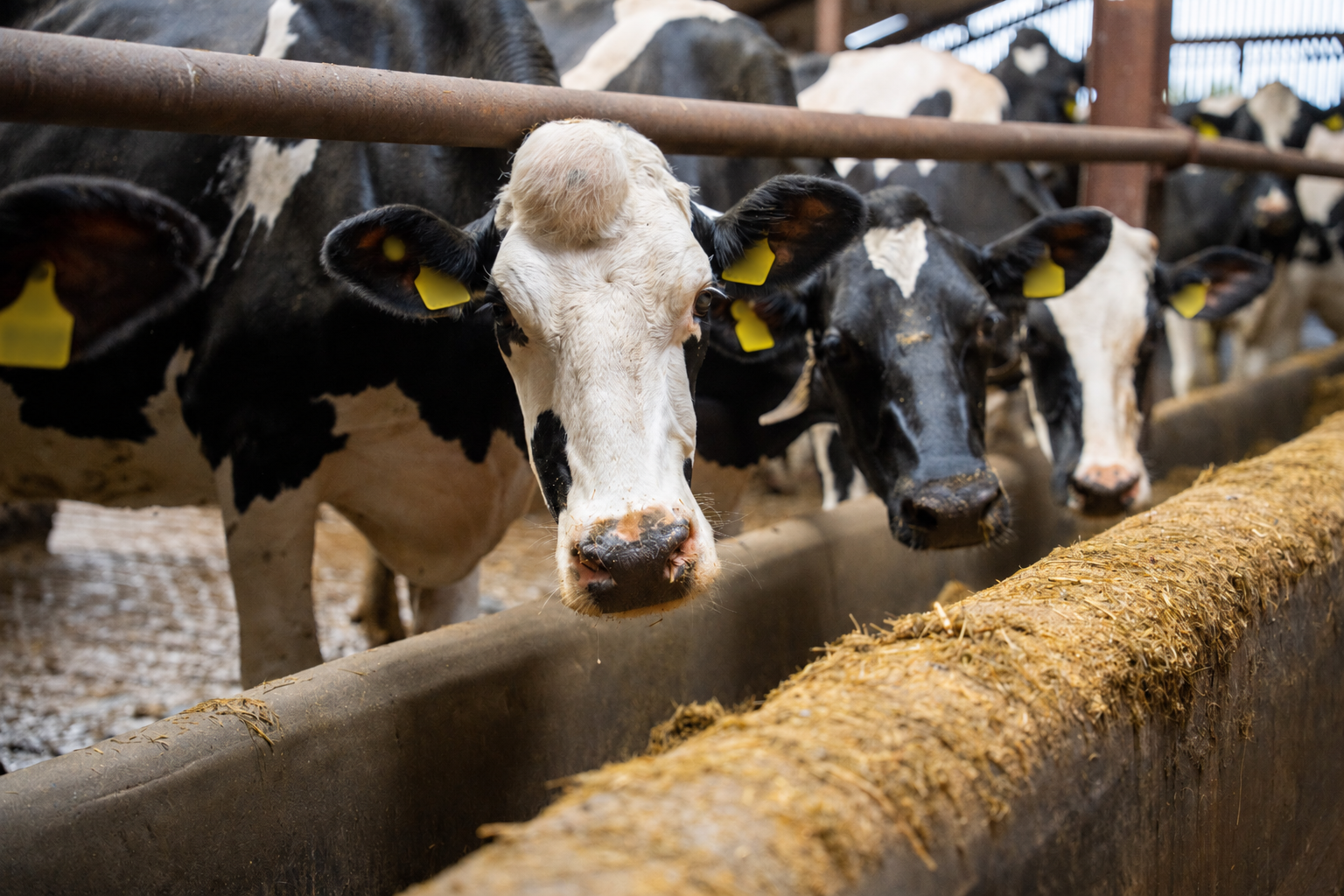
The trial involved 170 Holstein cows milked through robotic milking systems. The cows received a silage-free ration based on lucerne hay and mixed grass hay, supplemented with concentrates — a feeding system typical of farms supplying milk for Parmigiano Reggiano PDO cheese production.

The same group of cows was monitored before and during supplementation. An initial period without added yeast established baseline performance, with average milk production of 35–36 kg per cow per day.

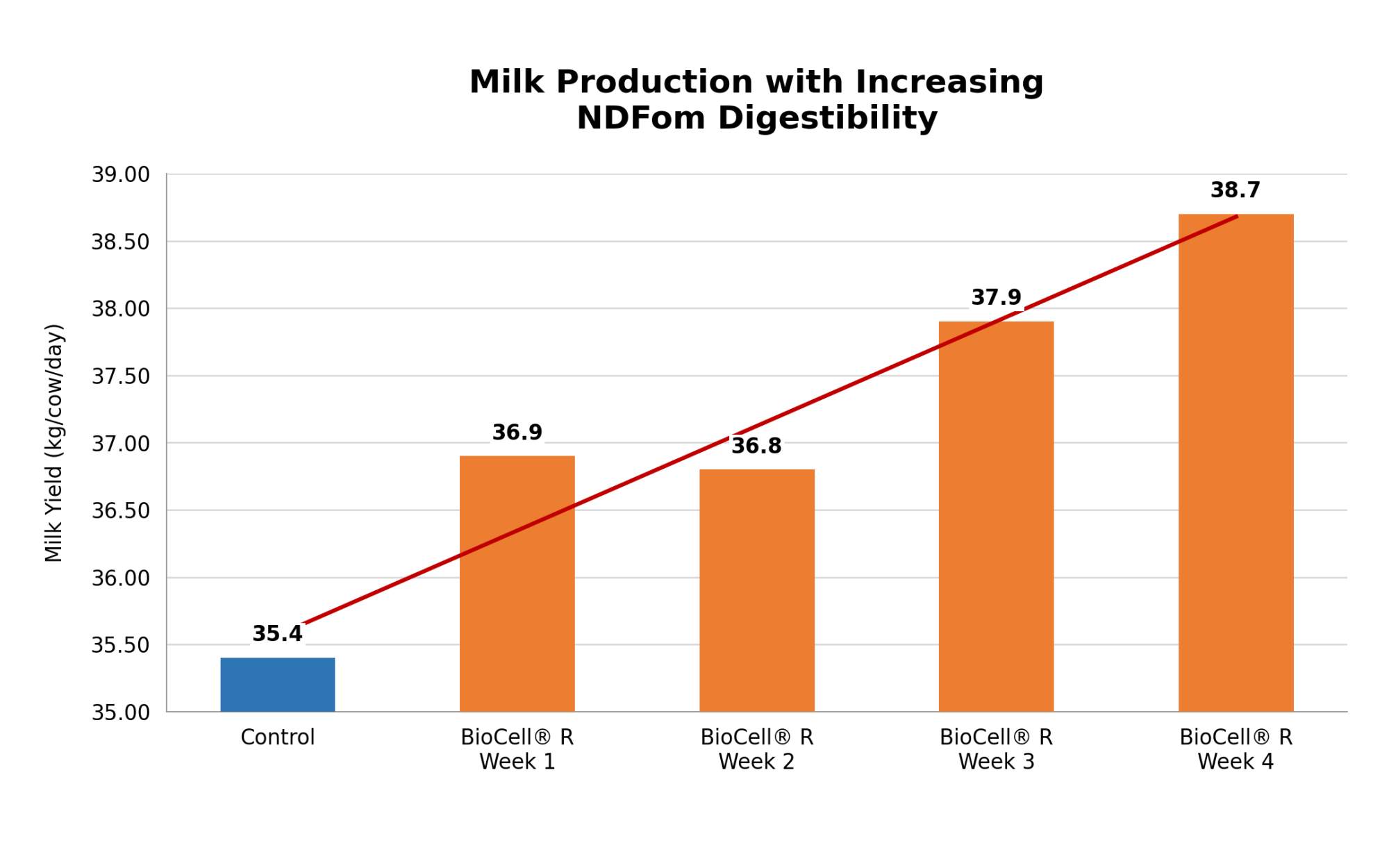
This was followed by four weeks of supplementation with 100 g of BioCell® R per cow per day, mixed into the total mixed ration (TMR). This supplied 80 billion colony-forming units (CFU) per cow daily.

Pooled dung samples and TMR samples were collected weekly during both periods. Digestibility was assessed using the Dairyland method, with a 240-hour undigested fibre marker. Dung sieving and milk production records provided additional information.

This was an observational on-farm trial designed to assess product performance under practical farming conditions.

What Did the Trial Show?

Improved Fibre Digestibility

Digestibility of NDFom — neutral detergent fibre corrected for ash — increased by an average of 4.3 percentage points. The improvement developed progressively and became more established during the final two weeks of supplementation.

Less Undigested Material in Dung

Dung sieving showed a progressive reduction in total retained residue compared with the baseline period. This was consistent with improved fibre breakdown.

Higher Milk Production

The article reported an average increase of 1.7 kg of milk per cow per day during supplementation, while body condition score was maintained.

BioCell-R-Milk-Production-English

What Does This Mean for Dairy Farmers?

The trial findings support the potential of BioCell® R to improve fibre utilisation and milk production under commercial farm conditions.

In the Italian trial, the value of the additional 1.7kg of milk substantially exceeded the cost of supplementation. For Irish dairy farms, getting more milk from forage is an important part of managing feed costs and improving margins. Better fibre digestion helps cows make greater use of the feed already in the ration.

The findings highlight an important principle in dairy nutrition: performance depends not only on what a cow eats, but on how effectively her rumen can turn that feed into usable nutrients.

By supporting rumen fermentation and fibre digestion, BioCell® R can help farmers get more from their ration and support milk production.

To find out how BioCell® R could fit into your herd’s feeding programme, contact the Mazzoleni Ireland nutrition team.