Targeted Liquid Energy for Dairy Cows

Targeted Liquid Energy for Dairy Cows

Maintaining sufficient energy intake is one of the main nutritional challenges in high-producing dairy herds. Energy demand increases rapidly after calving and may also rise during heat stress, periods of reduced intake or when forage quality limits the overall energy density of the diet.

Liquid feeds provide a practical way of introducing rapidly available energy through either an automatic milking system or the diet feeder. The correct product depends on the size of the energy deficit, the type of support required and the budget available on the farm.

Mazzoleni offers two complementary options: Energy EVO as a cost-effective liquid energy source for TMR and Rumen Juice as a premium liquid combining energy with additional functional ingredients dedicated to robotic milking systems.
 

3

Energy EVO: Cost-effective energy supplementation

Energy EVO is designed to provide an economical but quality source of readily available energy. It combines crude glycerine with glucose syrup, fructose, isomaltulose and sucrose.

These ingredients provide energy through complementary pathways. A proportion of the glycerine is absorbed through the rumen wall and transported to the liver, where it can contribute to glucose production. The remaining glycerine and sugar blend provide fermentable energy for rumen microorganisms.

Energy EVO is suitable where the primary nutritional objective is to increase energy supply without significantly increasing cereal starch. It can be used to:

  • Support fresh and high-yielding cows
  • Address a calculated dietary energy deficit
  • Provide additional sugar and fermentable energy
  • Support milk production during periods of reduced intake
  • Increase the energy concentration of the overall diet

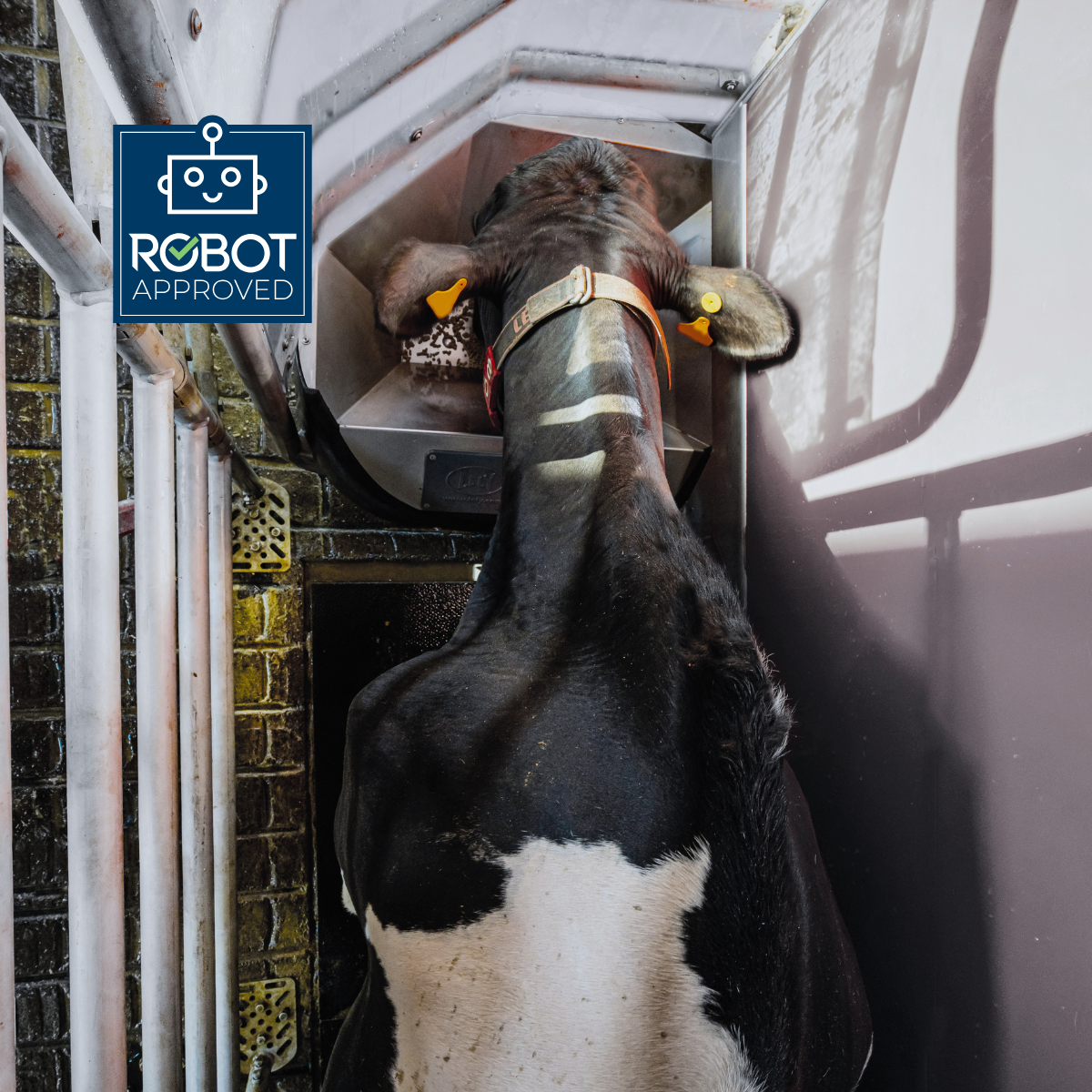
Energy EVO can be dispensed through the robot for targeted individual-cow supplementation. It can also be added through the diet feeder where additional energy is required across the entire milking group.

The recommended feeding rate for lactating cows is 400–800 g per head daily. The final rate should be determined by the size of the energy deficit and the method of allocation.

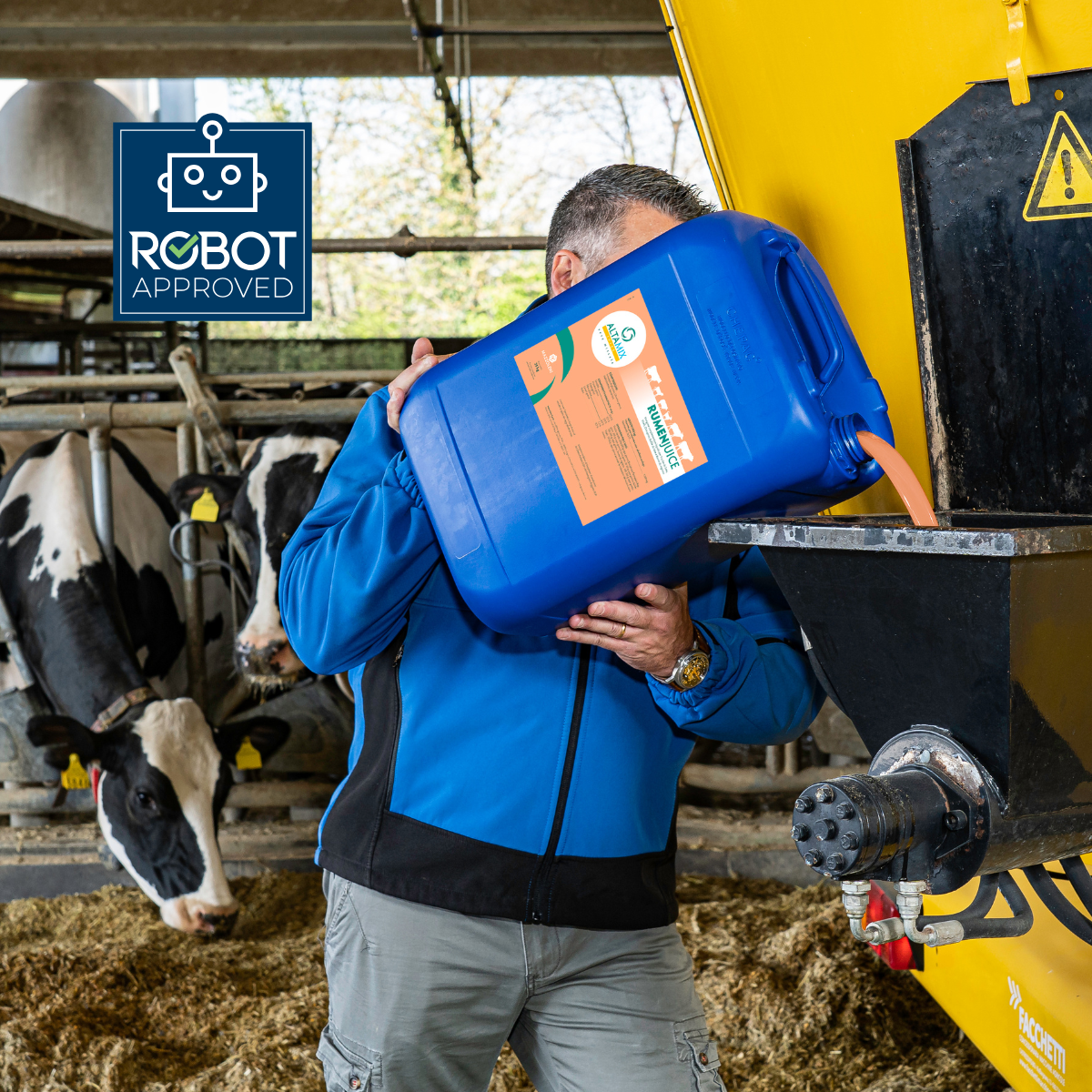
Where Energy EVO is fed through the diet feeder, accurate mixing is essential to ensure consistent intake across the group. When it is fed through the robot, allocation can be adjusted according to milk yield, days in milk and individual energy demand.


2

Rumen Juice: Energy with functional support

Rumen Juice also supplies energy through glycerine and a pool of sugars with different fermentation characteristics. However, it additionally contains inactivated yeast products, and niacinamide.

Its formulation provides three complementary forms of support:

  • Glycerine supplies rapidly available glucogenic energy.
  • The sugar pool provides fermentable energy for rumen microorganisms.
  • Yeast-derived products and niacinamide provide additional rumen and metabolic support.

Rumen Juice is particularly relevant where the farm requires more than a straightforward energy supplement. This may include:

  • Heifers or cows requiring improved robot attraction
  • Fresh cows under elevated metabolic pressure
  • High-yielding cows requiring support around peak lactation
  • Herds struggling to maintain lactation persistence
  • Cows experiencing reduced intake or heat stress
  • Diets where rumen fermentation and fibre utilisation require support

Rumen Juice is generally allocated through the robot at up to approximately 500 g per cow per day. This allows the product to be targeted towards fresh, high-yielding or otherwise challenged cows rather than supplied uniformly across the herd.


5

Choosing between the products

The selection is based primarily on the nutritional system, level of energy required and the economics of the feeding programme.

Energy EVO is generally selected where the main requirement is to supply additional energy in the TMR at a competitive cost. Its higher recommended feeding rate also allows a more substantial quantity of liquid energy to be delivered where the calculated energy deficit is greater.

Rumen Juice is selected for AMS (automatic milking system) where energy is required alongside additional functional support from yeast-derived products and niacinamide. It represents the premium option and is most appropriately targeted towards cows where these additional ingredients are likely to provide value


  Energy EVO Rumen Juice
Positioning Liquid energy source for TMR Premium functional liquid for robotic milking systems
     
Main objective Increase energy supply of diet Attractiveness and supply energy with additional rumen and metabolic support
     
Feeding system Diet feeder Primarily targeted through the robot
     
Dairy feeding rate 400–800 g/cow/day Up to approximately 500 g/cow/day
     
Energy contribution Higher potential daily inclusion More targeted energy contribution
     
Functional ingredients Glycerine and sugar blend Glycerine, sugar pool, inactivated yeast products and niacinamide
     
Best fit Larger or routine energy requirement Targeted support for higher-risk or higher-value cows


Matching supplementation to farm requirements

Liquid feeds should be selected following an assessment of the full diet rather than on product composition alone. Factors to consider include:

  • Dry matter intake
  • Milk yield and days in milk
  • Forage quality and digestibility
  • Dietary energy density
  • Total sugar and starch supply
  • Body condition and stage of lactation
  • The number of cows requiring supplementation
  • Product cost and expected return

Where a substantial group-level energy deficit exists, Energy EVO can be incorporated through the diet feeder. Where individual cows require additional energy, it can instead be targeted through the robot.

Rumen Juice is more appropriate where the objective is to combine targeted energy supplementation with additional functional support.

4